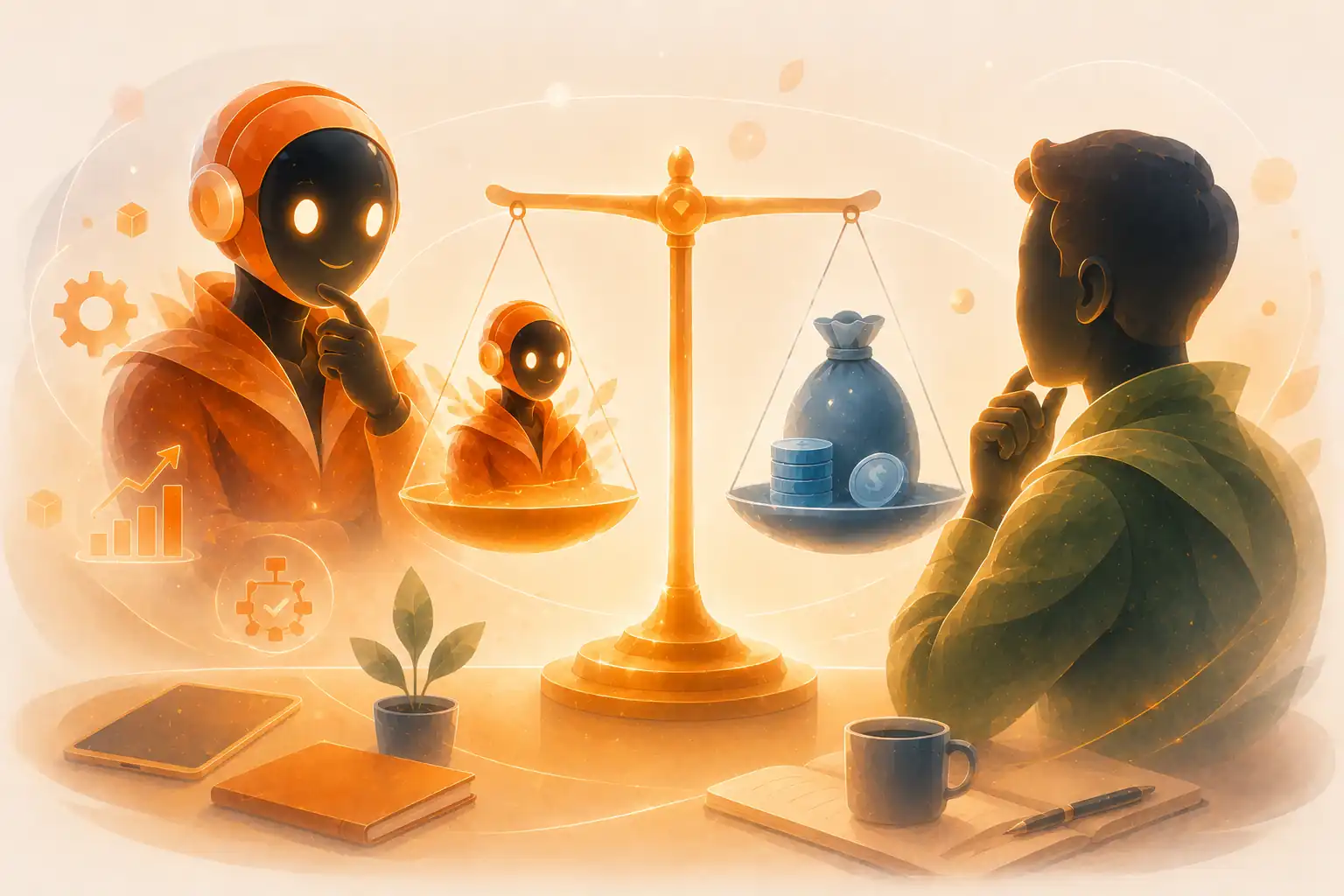
Most AI marketing has settled on a single story: fire your team, hire AI, watch your output multiply.
We think that story is wrong. We think it scares the customer who actually wants help, and we think it under-delivers on what AI can do well. We started Landing Pad Solutions to tell a different story, the one we have been living for the last eighteen months.
The story we kept hearing
Speak to enough small business owners and a pattern emerges. They are not drowning because they have too many people. They are drowning because they have too few hands and too many small tasks.
The founder who built the company is also the one writing the LinkedIn posts, replying to support emails, chasing a stale invoice, scheduling next Tuesday's discovery call, and updating the CRM stage on a deal that closed last week. Each task takes ten minutes. There are forty of them a day. Forty multiplied by ten is the entire morning, and the morning is when the actual work was supposed to happen.
We noticed our most successful clients all had the same problem. Too many small tasks, not enough hands. The advice they kept being given was to hire someone. But hiring is slow, expensive, and surprisingly fragile for a small team. The right person takes months to find. The wrong person takes longer to recover from.
So they kept absorbing the load themselves. And the work that mattered, the customer strategy, the new product idea, the careful conversation with a hesitant prospect, kept getting pushed to "after this email is answered." Which it never quite was.
What AI is actually good at
Here is what we noticed once we started using AI agents in our own business.
AI is good at the small tasks. Not all of them, but a meaningful slice. The tasks that are repetitive, well-defined, and emotionally low-stakes are the ones where an agent can deliver real, useful work without supervision. Drafting a follow-up. Categorising an inbox. Generating a status report. Surfacing a stale lead. Reading a discovery brief and turning it into a draft proposal.
What AI is genuinely bad at is the messy, human, high-judgement work. The conversation with a customer who is frustrated and needs someone to listen. The decision about whether to take on a difficult project. The creative leap that turns a flat marketing idea into a sharp one. The honest assessment of whether a deal is worth chasing.
So when we began deploying agents in our own work, we drew the line carefully. The agent does the repetitive work. The human does the work that needs a human. And critically, the agent is built to escalate the moment a task crosses that line.
What it has actually felt like
A concrete example. Iris is our AI Sales Agent. She handles inbound enquiries, drafts personalised outreach, follows up on stale deals, and keeps the CRM clean. She also writes a morning Slack digest with the three deals worth my attention today.
Iris handles 70% of our inbox. Which means I do not open the CRM or our Leads inbox until 11am most days. The hours that opens up go into client strategy work that actually grows the business, not into triaging messages from prospects who would have been better served by an automated reply anyway.
That is the part that surprised us. The hours we got back did not just disappear into more email. They went into work that was harder, more interesting, and more valuable. The repetitive tasks were eating cognitive bandwidth, not just clock time. Removing them changed what we were able to do, not just how fast we could do it.
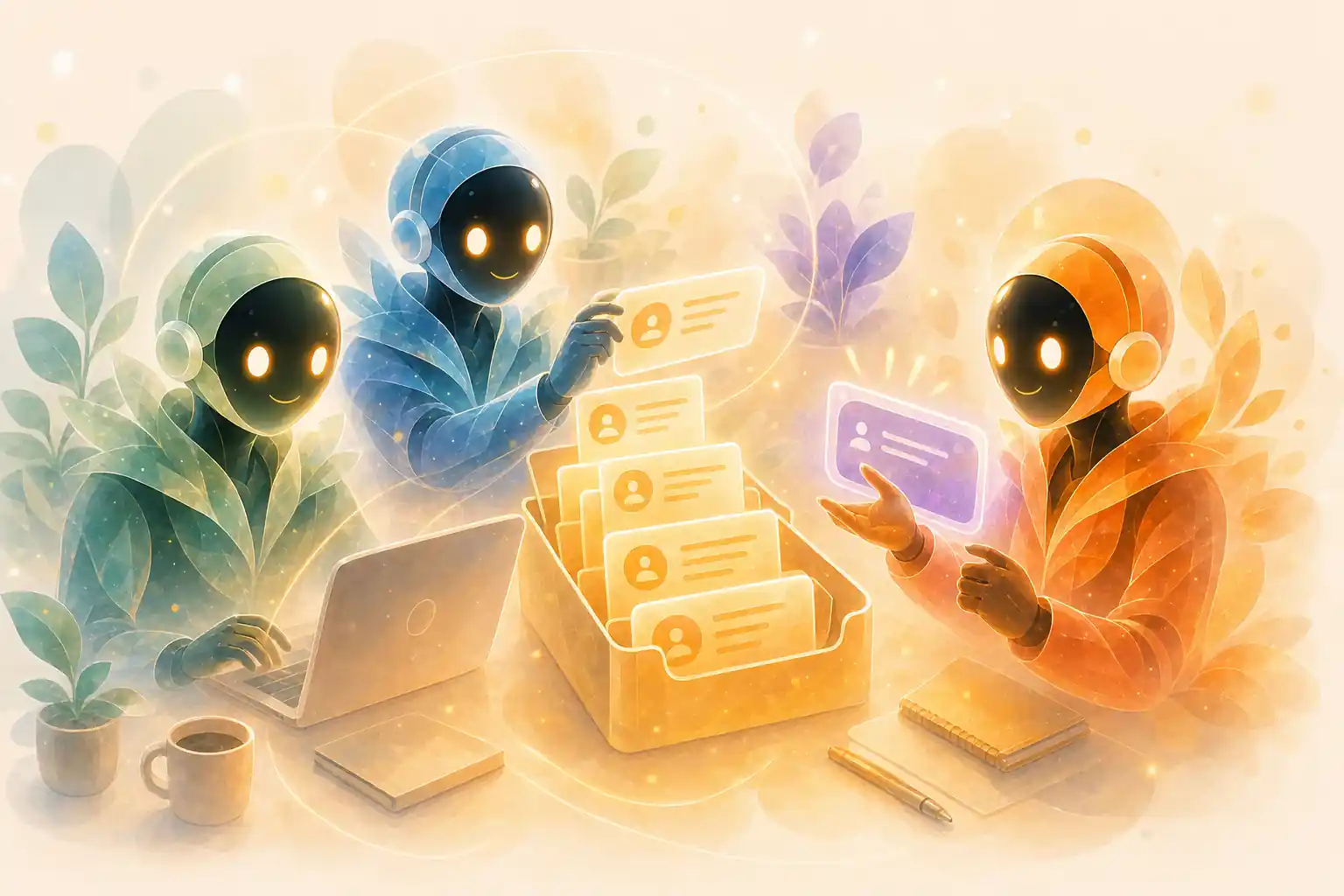
Lanna, our AI Customer Success Agent, has done something similar for our shared inbox. Customers reach out at all hours across email, web chat, and social. Lanna handles the questions she has high confidence on and escalates the ones that need a human. The morning starts at zero unread, every day. The team has bandwidth for the conversations that actually need them.
Why "reinforces, not replaces" matters
The AI marketing story most people are being sold treats the human as a cost centre. Replace them. Remove them. Get the same output cheaper.
We think that misreads what is actually happening in a small business. The human is not a cost to be optimised away. The human is the reason the business exists. The customer who chose to work with you, chose because of who you are, what you decide, and how you handle the moment when things go off-script. None of that survives if you replace the human with an agent.
What you can do, what we believe is the actual opportunity, is give that human their time back. Free them from the work they hate, the work that is repetitive, the work that any thoughtful agent could do as well or better. Then let them spend their hours on what only they can do.
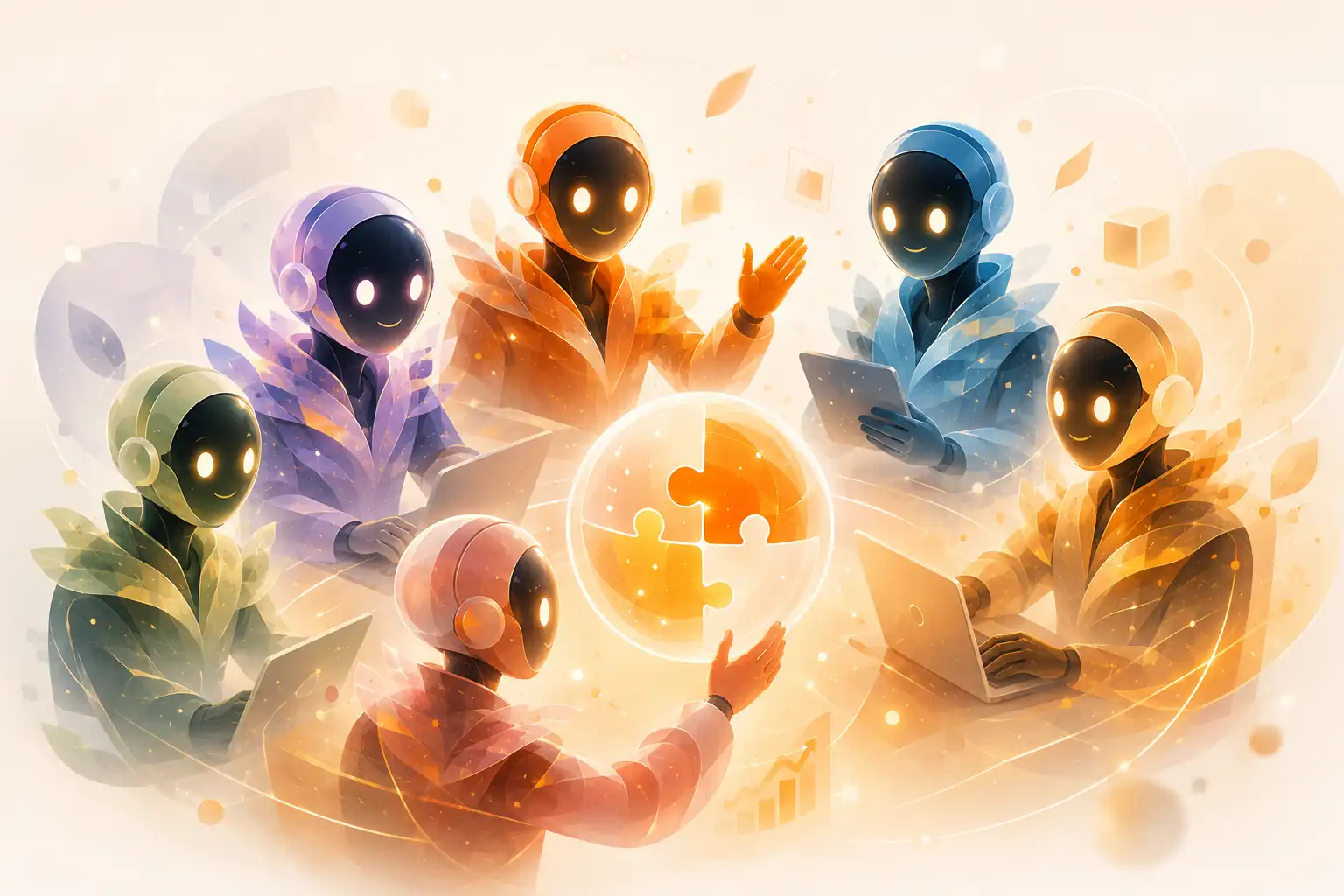
That is the position we have built Landing Pad Solutions around. We hire AI agents to support the business owners and existing teams who hire us. The agents do the repetitive work, the time-consuming work, the work that fills inboxes and CRM systems and project trackers. The humans focus on problem solving, creativity, and growth. And every agent we deploy is built to escalate the moment a task is no longer in its lane.
What this looks like in practice
We sell AI agents the way you would hire a person. There is a department they sit inside, a role they own, a brief that defines their scope, and a clear handoff for anything outside it. We are not selling a tool that promises infinite output. We are selling a teammate that does a focused job well.
Some of our customers hire one agent. Some hire a department. Some build a full custom configuration for their specific stack. Whatever the shape, the principle holds. The agent reinforces the team. It does not replace it.
If you are tired of the AI conversation that ends with "and then you fire your team", we built this for you.
Explore the catalogue to see the agents we offer by department, tier, or by who they work best for.
Related reading
- See how Lanna's setup works in practice: Customer Success that does not sleep
- See how Iris keeps our pipeline clean: The pipeline that does not leak
- For solo founders: Who it's for
- For expanding agencies: Who it's for